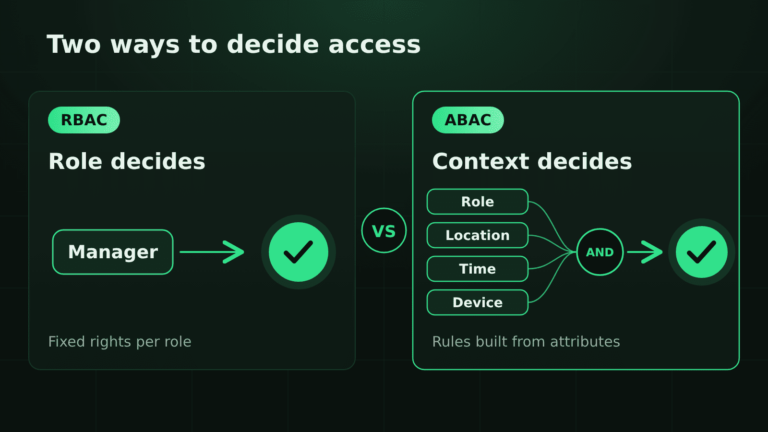
Cloud environments introduce new identity security challenges. Security teams need to verify who is requesting access, what permissions they need to perform their work, and whether the request is legit. The lack of clear infrastructure boundaries makes identity management one of the most important tasks for CloudSecOps.

Moving databases and servers to the cloud requires companies to rethink their approach to information security. Traditional perimeter-based security controls become less effective as network boundaries grow less defined, and companies face new IAM challenges. Businesses regularly introduce new applications that need to exchange data securely and reliably.
IAM challenges in cloud computing become more complex as organizations expand across multiple cloud platforms. Using services from different providers can create gaps in security visibility. Administrators must constantly switch between consoles to determine who has access to specific resources.
Identity Governance Challenges in Multi-Cloud Environments
Distributing corporate workloads across multiple clouds makes security monitoring more complex. Monitoring network activity becomes increasingly difficult as global cloud infrastructure requires collecting and consolidating large volumes of logs from different sources. Teams often spend hours consolidating metrics into a consistent, understandable format.
Integrating Cloud Identity and Access Management
A well-designed cloud identity and access management strategy can help address this challenge. Without centralized monitoring and analysis, teams can lose visibility into access activity. IAM tools integration provides a unified view of how users and systems interact with cloud resources through a single dashboard.
Cloud services often use different authentication methods and authorization models. This can lead to situations where the same employee has inconsistent access permissions across different cloud resources. Managing identity governance manually becomes increasingly difficult as businesses grow, making automation an important part of the process.
Over-Privileged Accounts: A Silent Threat
A major security risk comes from granting users more permissions than they actually need. Engineers often grant broad cloud permissions to speed up workflows and avoid lengthy approval processes. This can make development easier at first, but it creates security risks when permissions are not revoked after a project is released.
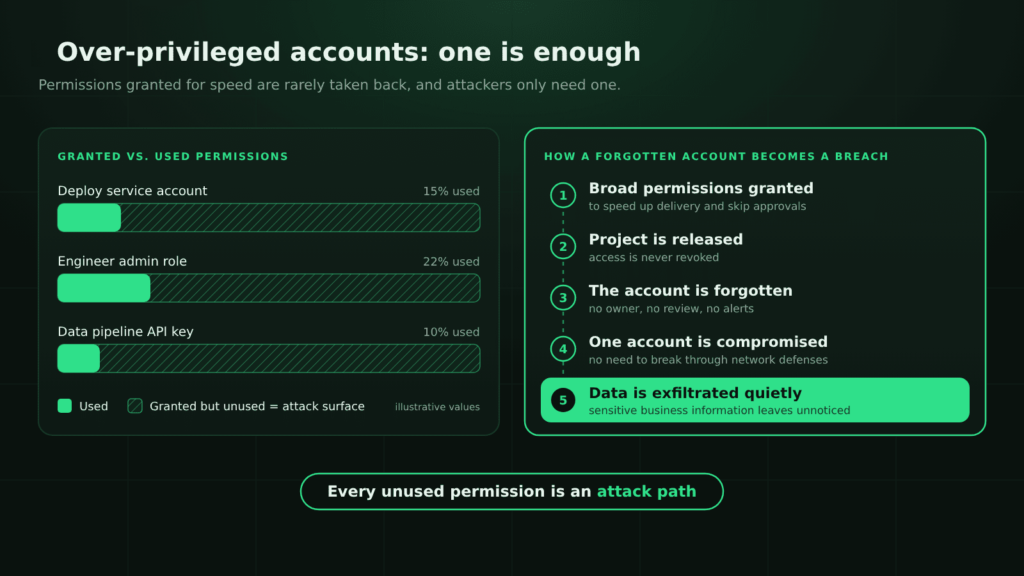
Forgotten over-privileged accounts can become attractive targets for attackers. Attackers may not need to bypass complex network defenses. Compromising just one over-privileged account may allow them to quietly exfiltrate sensitive business information.
Implementing Cloud Unused Access Detection
Cloud unused access detection helps organizations identify dormant accounts and unnecessary permissions. These tools regularly scan cloud environments to identify unused permissions, allowing security teams to review and revoke them manually or through approved automation. This approach reduces the risk of data exposure through dormant accounts.
Hidden Dangers of Service Accounts
Service accounts, created to allow applications to interact with each other, introduce a separate category of security risks. Developers often overlook these accounts once an integration is working. However, these accounts may retain broad cloud entitlements to access sensitive financial systems or customer databases.
Without regular identity monitoring, these machine identities can leave backend systems vulnerable to unauthorized access. Automated monitoring tools should continuously analyze service account activity. Risk assessments help teams detect unusual traffic and block suspicious database requests.
How to Build Effective Access Policies
Creating effective access policies requires careful configuration, validation, and ongoing review. Even a small IAM misconfiguration can unintentionally expose sensitive cloud resources to unauthorized users. Reliable permission management cannot depend solely on manual edits, which increase the risk of configuration errors.
Using an IAM Policy Generator
An IAM policy generator can simplify policy creation and reduce the time spent writing and reviewing permissions manually. Such a tool helps create policies based on the development team’s actual access needs. It analyzes activity and generates rules without requiring teams to write them from scratch.
Strict access controls limit cloud resource permissions to what each task requires. Access requests can be tracked throughout their lifecycle. With time-limited access controls, additional privileges can be automatically revoked once an approved operation is complete.
Managing the Identity Lifecycle and Ensuring Compliance
Employee identities and access needs change throughout the employment lifecycle. From hiring to promotions and departures, required permissions evolve. Effective identity lifecycle management ensures that access is updated at each stage of employment.
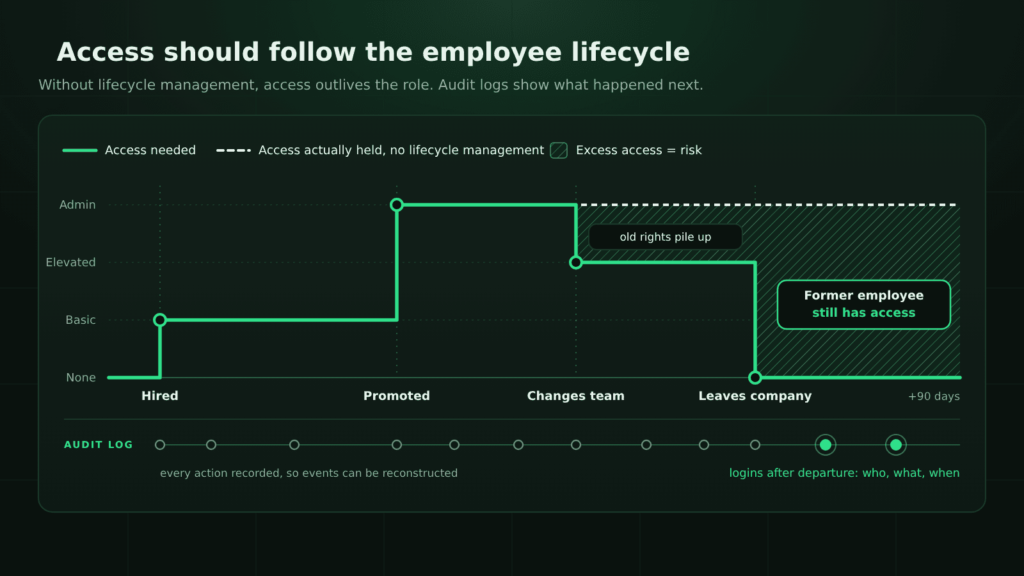
Former employees who retain access credentials to internal servers can create serious security risks. Companies need clear visibility into user access and reliable audit trails. Detailed audit logs help teams reconstruct events, review individual actions, and identify the root causes of unauthorized infrastructure changes.
Establishing Strong Verification Practices
A practical IAM audit checklist helps teams organize recurring access reviews and compliance checks. It also simplifies preparation for various certifications.
Key elements of access reviews include:
- Ongoing validation of active sessions and access requests.
- Automated access restrictions when unusual activity is detected.
- Prompt revocation of privileges when employment ends.
- Collecting detailed activity data to support security reviews.
- Regular reviews of existing permissions.
Maintaining consistent access controls requires clear procedures for the entire team. Even effective tools cannot replace internal standards for reviewing and verifying permissions.
Implementing Least Privilege and Policy Enforcement
A key principle of cloud access security is to deny access by default and grant only the permissions required for specific tasks. The principle of least privilege means that each identity receives only the permissions needed to perform its work. Combining least privilege with time-limited access can significantly reduce the potential blast radius of a security breach.
Maintaining this principle requires ongoing access rightsizing. Automated tools analyze account activity and help identify and remove permissions that are no longer needed. Consistent policy enforcement helps prevent unauthorized configuration changes and ensures that approved access rules are followed.
Building a Resilient Cloud Security Posture
Accounts with the highest privileges require close monitoring. Managing privileged access is critical because compromised administrator accounts or configuration errors can lead to serious security incidents and financial losses. This makes comprehensive cloud IAM risk management an important part of a company’s security strategy.
Protecting infrastructure doesn’t end with configuring a single tool. It requires ongoing review and adjustments as threats evolve. Companies should regularly review their security approaches and adapt them to new risks.
By following proven IAM best practices, businesses can build more resilient and reliable cloud environments. Regular permission reviews, improved internal processes, and specialized tools help strengthen cloud security over time.