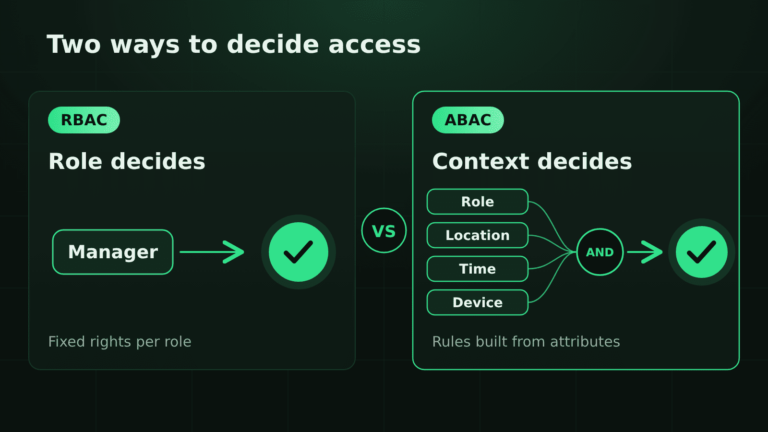
This principle helps protect sensitive information in a cloud environment. Every business should keep its data secure. Many breaches occur precisely because ordinary employees have too many permissions on corporate systems. It is worth analyzing the principle of least privilege in more detail and understanding its absolute importance for protecting your infrastructure from internal and external threats.
When a company hires a new employee, he is given an office pass. However, this pass should not open the door to the director’s office or server room. A person gets access only to the place where he works directly. This is a simple way to explain the principle of least privilege. This approach means providing the minimum necessary rights.
How to Define Least Privilege and Its Core Mechanics
The main idea of rights limitation is very simple and logical. Security experts define least privilege using one simple rule. Each user or computer program receives only the level of access that is needed to perform a specific task right now. Nothing extra. If the developer just needs to read the database, they should not have permission to modify or delete it.
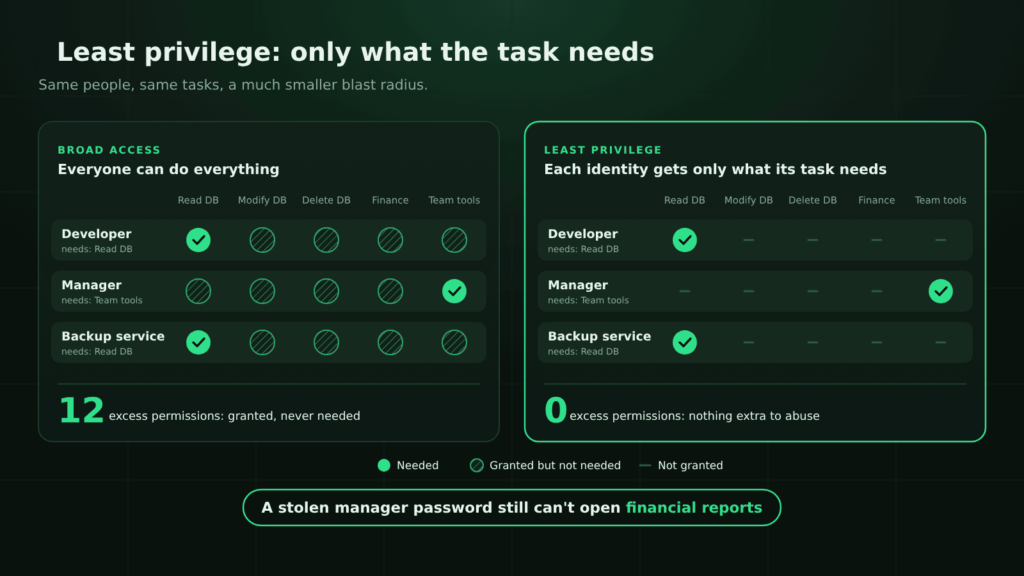
This is how a reliable least privilege access model is formed. This approach does a great job of limiting redundant cloud permissions, preventing unauthorized access. Your overall cloud infrastructure becomes much more secure. In fact, the concept of least privilege helps to keep all permissions under strict control. No one has excessive power over the system, which means that nothing will be accidentally broken. Even if a hacker steals a regular manager’s password, he won’t be able to access the company’s financial reports.
Dangers of Over-Privileged Accounts
Why are excess rights so bad? IT teams sometimes skip configuring specific permissions for new employees. They take the easiest way and give employees extended rights so that they don’t bother them with constant requests. Over time, a person changes positions, accumulates new cloud entitlements, and no one takes away old permissions. This is how over-privileged accounts appear.
These are profiles with a huge number of rights. They pose a serious security risk to businesses. One small mistake or accidental download of a virus by the owner of such an account can stop the work of the entire company. Usually such oversights or small misconfigurations lead to huge financial losses.
To avoid a disaster, companies need a regular risk assessment. A risk assessment reveals weaknesses before criminals exploit them. Regular privileged user monitoring and audit also helps identify potential threats. These processes allow you to see exactly what people with high access are doing. Administrators can stop suspicious activities and block unsafe sessions in time.
Implementing Principle of Least Privilege Access Control
Implementing a reliable principle of least privilege access control is not so difficult if you act consistently and according to a clear plan. First, it is necessary to review and organize the company’s existing access permissions.
Here are the basic steps to set up strong security:
- Full check of all available cloud resources to identify redundant permissions for employees.
- Mandatory authentication with confirmation of identity by phone or work mail for each login to the system.
- Clear authorization, where the system checks the person’s right to a specific action with the file each time.
- Regular access rightsizing, that is, reducing permissions to the minimum necessary level.
- Creation of strict access policies that prohibit the automatic transfer of old permissions when an employee moves to another position.
- Setting up identity monitoring to track user activity across the network.
It is important to understand that quality least privilege access is built step by step, not in one day.
Automation and Least Privilege Management Software
It is simply impossible to do all these checks and adjustments manually. No person is capable of keeping thousands of rules in his head. The problem becomes even bigger when the company uses a multi-cloud environment with dozens of different cloud services. Automated processes and service accounts exchange data without direct human involvement. Therefore, the security principle of least privilege requires the mandatory use of special programs.
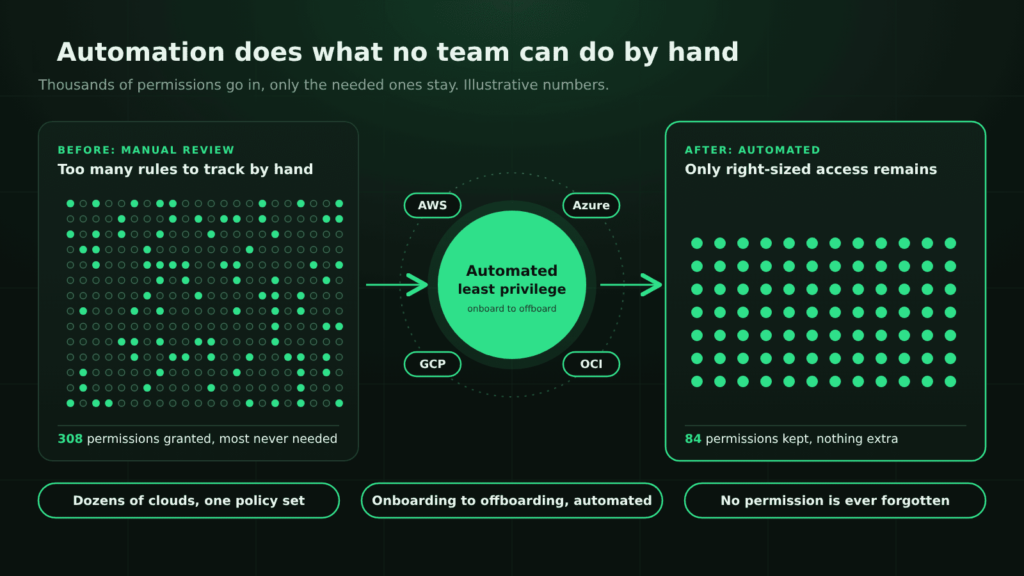
The least privilege management software does all the complicated and routine work for you. It automatically manages access permissions from employee onboarding through offboarding. This process is known as identity lifecycle management. Specialized tools help maintain cloud least privilege by enforcing access policies consistently across cloud environments.
Automation strengthens identity security by reducing human error and administrative workload. System identity governance helps keep all identities and accesses under one roof. Programs simply do not forget to remove unnecessary rights in time.
Compliance and Least Privilege in Cyber Security
Any serious business must strictly comply with the requirements of state laws and international data protection standards. Because of this, least privilege is an important part of meeting cybersecurity compliance requirements. Auditors always want hard evidence of your reliability and responsibility.
Clean and clear audit logs, where all actions with important documents are recorded in detail, are the best evidence for auditors. At the same time, automated policy enforcement blocks unauthorized access attempts. This instantly and tangibly improves your overall cloud security posture. The infrastructure becomes strong and sustainable.
A simple and clear report on the state of security is very important for company management and investors. Convenient least privilege compliance reporting shows the real state of affairs without using too complex technical terms. Compliance becomes easier to manage. In general, effective access control and privileged access management help to protect a company’s finances and reputation, preventing small mistakes from turning into huge problems.